Zaanse Schans from Amsterdam
Day trips Zaanse Schans windmills from Amsterdam, the Netherlands
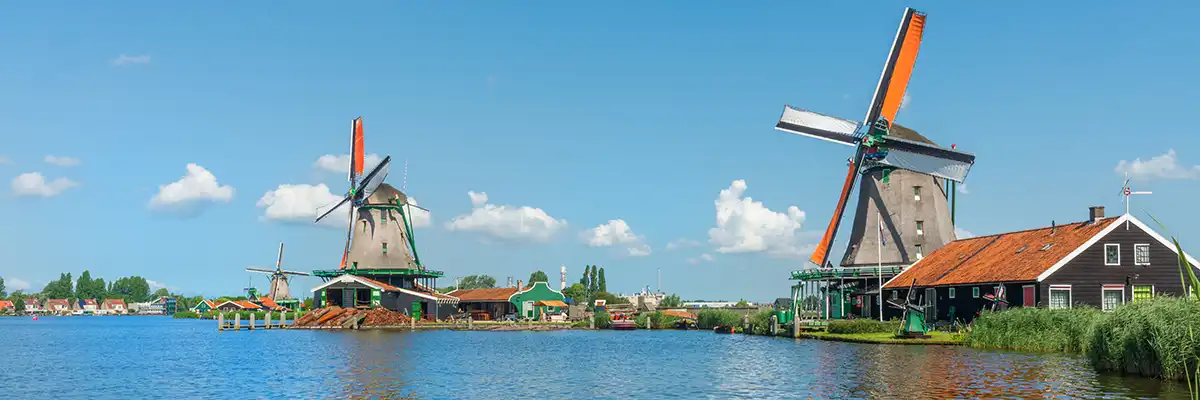
Discover the Zaanse Schans in the Netherlands: historic windmills, wooden houses, and traditional crafts. A perfect excursion and day trip from Amsterdam, full of Dutch heritage.
Tickets Zaanse Schans & Day tours from Amsterdam |
|
| Address | Schansend 7 in Zaandam (you pay 15 euros for the parking ticket on the spot) |
| Transport | Public transport: From Amsterdam Central Station, you can take the local train operated by NS to Zaandijk-Zaanse Schans. The train journey takes 17 minutes, followed by a 15-minute walk to the Zaanse Schans (book your train tickets). Organized bus tour: From Amsterdam, various day trips are offered that take you to the Zaanse Schans with a guide. A major advantage of these day trips is that they are often combined with visits to other popular highlights such as Volendam, the island of Marken, or the Keukenhof. Choose from the following five day tours:
|
| Tickets |
|
| Hours | Not all attractions are open every day (for example, which windmills are open varies from day to day). Most locations are open daily from 9:00 AM to 5:00 PM. |
Visiting the Zaanse Schans
The Zaanse Schans is one of the most famous sights in the Netherlands, and for good reason. This open-air area, located on the Zaan River near Zaandam, offers a unique glimpse into 18th- and 19th-century Dutch life. When I first arrived, I was immediately struck by how compact the area is, yet there is so much to see and learn. The Zaanse Schans is freely accessible and consists of a collection of historic windmills, wooden houses, warehouses, and workshops that were relocated here to preserve the heritage of the Zaan region. This area became one of the world's first industrial zones, where wind power was used on a large scale. That alone makes a walk through the Zaanse Schans not only beautiful but also highly educational.
 Authentic houses at the Zaanse Schans
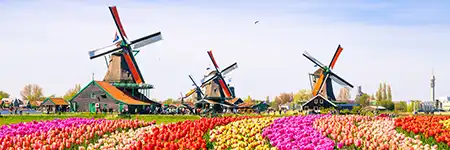
 Windmills form the skyline of the Zaanse Schans
Windmills of the Zaanse Schans
The windmills form the heart of the Zaanse Schans and collectively tell the story of the region’s early industry. Several working windmills are scattered throughout, each with a specific function. For example, De Kat is a paint mill where pigments are still ground in the traditional way, something rarely seen today. The Jonge Schaap is a sawmill demonstrating how tree trunks were cut into planks using wind power, a major innovation at the time. Other mills, such as De Zoeker and De Bonte Hen, illustrate the production of oil and other raw materials. What I personally found fascinating is that many of the windmills allow visitors inside and provide explanations about the techniques and daily work of the miller. This gives these impressive structures far more meaning than just their photogenic appearance.
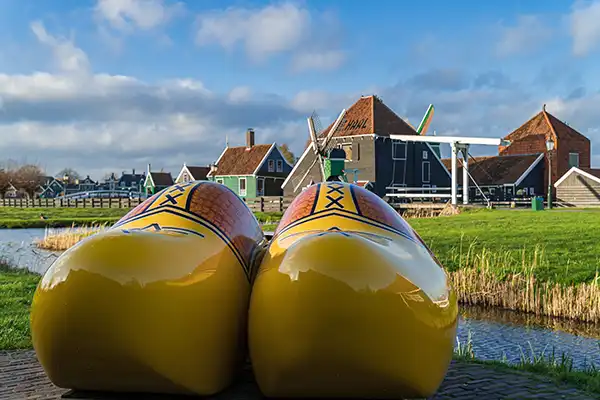 Watch a traditional clog-making demonstration?
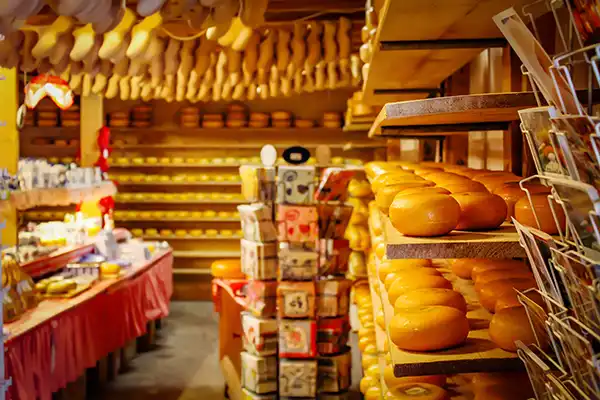 The cheese factory at the Zaanse Schans
Artisan museums in the Netherlands
In addition to the windmills, the Zaanse Schans features several museums and artisan demonstrations. The Zaans Museum provides a comprehensive overview of the region’s history, with a focus on trade, industry, and daily life. Here, I learned how products like cocoa, paper, and linoleum were once traded worldwide from this area. The Verkade Experience, part of the museum, is also highly recommended: it tells the story of the famous Dutch brand through machines, packaging, and even old advertisements. Scattered throughout the Zaanse Schans are smaller sites such as the Weavers’ House and the Cooperage Museum, where traditional crafts that were once essential are showcased. These locations make history tangible and add variety to your visit.
Traditional crafts
Another important aspect of the Zaanse Schans is the traditional crafts that are still demonstrated today. The clog-making workshop is a prime example. While clogs are now mainly seen as souvenirs, they were once everyday footwear for workers. Watching the production process up close gave me a greater appreciation for this typically Dutch product. The cheese-making workshop also attracts many visitors, often offering tastings alongside explanations. Additionally, there are shops selling Zaanse mustard, cookies, and chocolate, products for which the region has historically been known. The great thing is that these crafts are not just aimed at selling, but also at passing on knowledge.
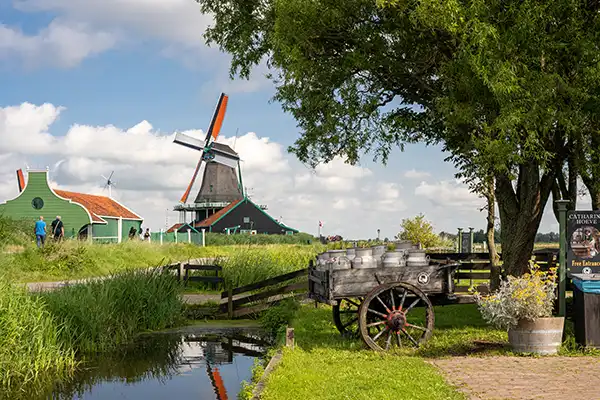 Street scene at the Zaanse Schans
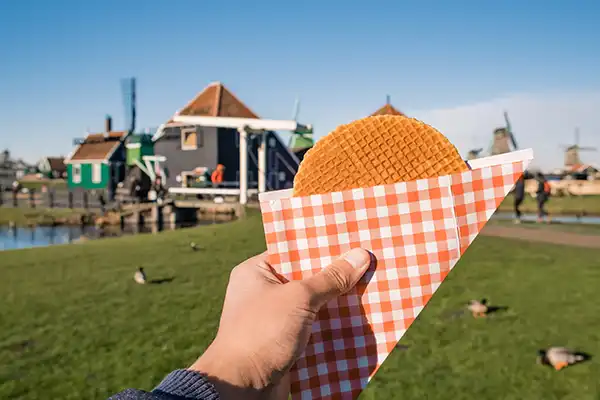 Typical Dutch: syrup waffles
Surroundings of the Zaanse Schans
What makes the Zaanse Schans especially appealing to me is its surroundings. The area is located along the water and surrounded by greenery, creating an open and peaceful atmosphere despite the many visitors. While walking past the wooden houses, I noticed how well they are maintained and how each building tells its own story. Some houses are still inhabited, emphasizing that the Zaanse Schans is not a static museum but a lively place. With views of the windmills and passing boats, it sometimes felt as if time stood still. At the same time, the Zaanse Schans offers modern amenities, such as cafés and clear information points, making the visit comfortable.
Zaanse Schans tours from Amsterdam
From Amsterdam, various day trips are available that take you to the Zaanse Schans with a guide. A major advantage of these excursions is that they are often combined with other popular sights, such as Volendam, the former island of Marken, or even the Keukenhof.
Where is the Zaanse Schans located in the Netherlands?
The Zaanse Schans is located northwest of Amsterdam. It is approximately 15 kilometers from the center of Amsterdam to the Zaanse Schans. Depending on your mode of transport, you can usually reach it within 20 to 30 minutes.